
Smart Glass Home Upgrades: 7 Top Add-Ons (2026)

LA homeowners increasingly think about smart-home spec as a stack — connected lighting, integrated audio, smart thermostats, security, and now switchable glass. The seven smart glass home upgrades below are the privacy-and-lifestyle add-ons we ship most often on whole-home projects, drawn from real installs across LA luxury and mid-century residential in the last 12 months. Each upgrade is independently valuable; together they compound into a meaningful smart-home story.
This guide walks the seven add-ons we recommend on every residential consult that includes whole-home spec scope. Each comes from real LA-area installs, with the resale-and-lifestyle math behind why each upgrade pencils out for the homes where it fits.
Where Switchable Glass Sits in the Smart-Home Stack
Five years ago, switchable glass was a novelty. Today, these upgrades are an expected layer in LA luxury residential — alongside Lutron lighting, Sonos or Savant audio, Nest or Ecobee climate, Ring or SimpliSafe security, and integrated voice control. Buyers increasingly screen for connected-home spec across all those layers during purchase due diligence, and switchable glass is becoming part of the expected stack rather than a differentiator. The seven upgrades below are how the stack typically gets built out.
The 7 Top Add-Ons
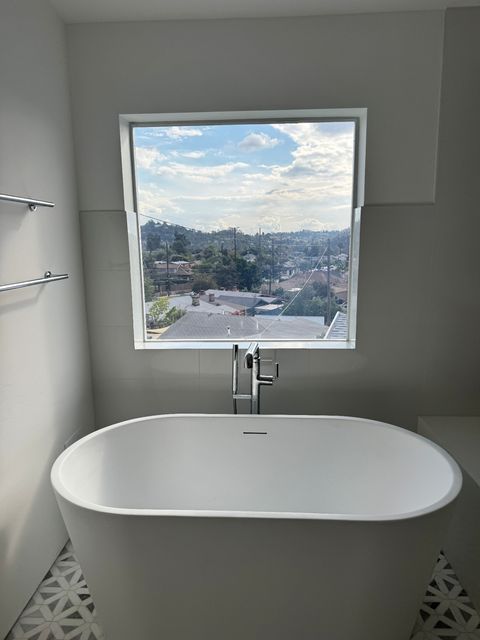
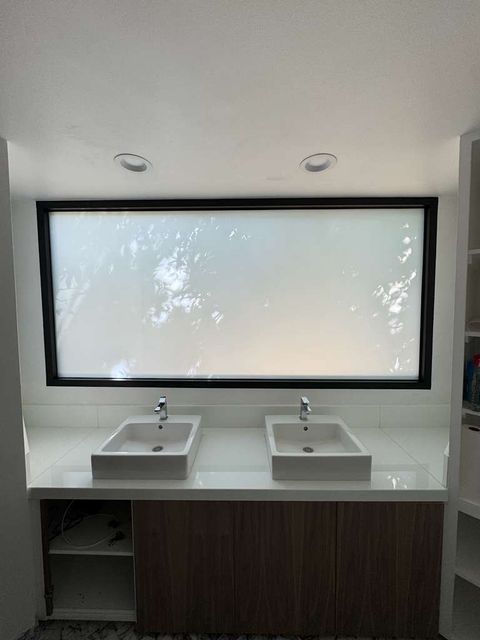
- 1. Master-bath switchable glass for morning-routine privacy. The most common add-on we install. Master bathrooms in LA luxury and mid-century homes increasingly have direct view-facing glass — beautiful architecturally, awkward at 7am. Switchable glass on the master-bath window or shower enclosure delivers instant morning privacy without permanently treating the glass that gives the bath its design value.
- 2. French-door entry-glass spec. French doors leading to courtyards, side patios, or guest entries benefit from switchable glass spec — the doors stay welcoming and connected to outdoor space by default, then flip private when the homeowner wants closed-room privacy or after-hours security signal.
- 3. Front-door sidelight privacy. Many LA homes have glass sidelights flanking the front door that reveal the entryway to anyone on the porch. Switchable glass on entry sidelights gives the homeowner the option to keep the sidelights clear and welcoming during the day, frosted in the evening for entry privacy.
- 4. Home-office partition for hybrid-work spec. The work-from-home pattern that defined 2020–2024 has settled into permanent hybrid-work spec on most LA luxury residences. A switchable-glass partition between the home-office area and the rest of the home gives the resident video-call privacy without committing to a permanent enclosed office that hurts resale.
- 5. Bedroom-window evening privacy spec. Master bedroom and guest bedroom windows benefit from switchable glass that flips private at sunset or on a sleep-mode trigger, then returns to clear at sunrise. Eliminates the daily blind-adjustment ritual; integrates cleanly with the rest of the smart-home automation stack.
- 6. Pool-house and accessory-dwelling spec. LA properties with pool houses, ADUs, or detached studios increasingly use switchable glass on the pool-facing or yard-facing surfaces — the structures stay open to the main house’s outdoor view by default, flip private when used for guest accommodation or focus work.
- 7. Smart-home integration as the connective layer. The seventh upgrade is what ties the first six together. Switchable glass integrated with the home’s existing Lutron, Savant, Crestron, Alexa, or Apple HomeKit hub delivers scene-based privacy control — “good night” presses one keypad button and frosts every bedroom, bathroom, and entry-glass surface simultaneously. One installer note worth knowing early: integration is dramatically cheaper to plan up front — retrofitting it after install means re-pulling cable. Even if you won’t use smart-home control on day one, decide the control path during the spec phase, before the electrician shows up.
For technical context on the underlying switchable-glass technology that powers the seven upgrades above, see our smart glass PDLC page — covers the spec details that determine product behavior across residential applications.
Insider Spec Tips Before You Order the Upgrades
Whichever of the seven upgrades you pick, a few install-side details separate a quality install from a generic one — straight from working LA-area installers and the rescue calls where one was missed:
- Glass-prep time predicts install quality more than product grade. Rushed prep is the leading cause of edge-bubble service calls in months 2–6 post-install. Ask how much time the installer allocates to glass prep versus film application; the right ratio is 60/40 or higher in favor of prep.
- Driver placement matters for service-life accessibility. Ask “where will the driver live, and can I reach it for service in year 5?” during the site-measure walkthrough. If the installer hedges, expect a quick-and-easy placement that becomes expensive to service later.
- Default-state behavior is a feature, not a bug. Switchable glass defaults to frosted on power loss, so a flicker leaves the glass private rather than transparent — ask for the user-briefing paragraph during the consult so nobody calls the first flicker as a malfunction.
- Cheap online kits aren’t a value spec — they’re a future re-install. The failure mode is yellowed adhesive, delaminated edges, and dead spots within 12–24 months, followed by a rescue install on the same opening.
- Existing window film blocks the install. Tint, sun-control film, or frosted vinyl reduces optical clarity and may void install warranty — confirm during site measure that the glass is untreated, and plan removal as a separate prep step if it isn’t.
- Schedule the 60-day walkthrough at completion. Most install-side issues (edge bubbles, control flicker, driver buzz) surface in the 30–90 day window — a 60-day walkthrough catches them while they’re still under install warranty.
For a single-room example of these tips applied end-to-end, see smart glass on a Pasadena bathroom window — zero service calls in the months since.
Where the Upgrades Pay Back Most Clearly
Across the LA-area residential installs we ship, the upgrade stack pays back fastest in three home types:
- Modern and mid-century homes with frameless or floor-to-ceiling glazing. Upgrades #1, #2, and #4 compound — the architectural fit between switchable glass and design-forward residential is so strong that the upgrade reads as native rather than retrofit.
- Smart-home-equipped residences with existing Lutron, Savant, or HomeKit infrastructure. Upgrade #7 (integration) is decisive on its own — the hub is already paid for, and adding switchable glass to the scene control adds incremental cost with high lifestyle return.
- Multi-bathroom luxury homes with view-facing glass. Upgrade #1 (master bath) and upgrade #5 (bedroom evening privacy) compound across multiple bathrooms and bedrooms — the maintenance load on blinds across multiple rooms becomes a real recurring cost that switchable spec eliminates.
How the Add-Ons Compound Across a Whole-Home Install
The seven upgrades above don’t sit in isolation — on a typical whole-home install (master bath + bedroom + French doors + front-door sidelights + home-office partition), four to six of these add-ons compound on the same project. The cabling spec, driver placement, and smart-home control scale cleanly across rooms because the underlying product is the same — only the room context differs. The per-room cost drops as the install scales.
For multi-room luxury residential, this means a home-wide switchable-glass standard can serve very different room contexts under one app and one set of physical control surfaces. The integration story becomes a meaningful resale value contributor as well — buyers in the LA luxury-residential market expect connected-home spec across all major systems, and switchable glass is now part of that expected stack. The spec-discipline tips above matter most on exactly these projects — a spec error repeated across three or more glass surfaces becomes a substantial debugging exercise.
Real Project Math
For a typical LA luxury residence with two primary upgrades (master bath + front-door sidelight, ~50 sq ft of glass), spec is quoted in writing after a measurement. For a full whole-home stack (master bath + bedrooms + French doors + sidelights + home office, ~200 sq ft total), spec is quoted in writing after a measurement — the per-room cost drops as the home-wide install scales.
The resale-value contribution on the LA luxury-residential market typically exceeds the spec cost over the home’s ownership horizon — the connected-home stack reads credibly to buyers as part of standard purchase due diligence, and switchable glass is increasingly an expected line item.
A Beverly Hills Front-Door Reference
For a concrete example of these upgrades applied end-to-end on a single residential project, our Beverly Hills front-door install hits four of the seven upgrades directly. Front-door sidelight switchable glass (upgrade #3), Lutron Caseta smart-home integration (upgrade #7), scheduled-mode automation that ties to sunrise/sunset (part of upgrade #7’s scene control), and smartphone fallback control — all unified under one Caseta scene that triggers from the existing keypad ecosystem.
Full project breakdown: smart glass front door in Beverly Hills — single residential scope, partial whole-home upgrade playbook applied.
Planning Whole-Home Smart Glass Upgrades?
Want to talk it through? Call us at (866) 728-9888 and we will walk your project, answer the open questions, and line up a measure if it makes sense. We install across the LA metro, and material-only orders for your installer are available by quote.